


Payment Processing for Startups
Apr 17, 2026

5 min read
Contents
What is a Payment Gateway for Business
How to Understand If a Payment Processor Is Reliable
Why Startups Need the Right Payment Gateway
How Can a Good Payment Processor Contribute to Business Growth
How Payment Gateways Processors Work
Key Factors When Choosing a Payment Processing Solution
How to Choose the Right Payment Processor for Your Startup
Top Payment Processing Startups
Conclusion
Share
Starting a business feels a lot like trying to build a plane while you are already flying it. You have to worry about the product, the marketing, and that one weird bug in the code that nobody can find. But eventually, you need to actually get paid.
Dealing with banks and digital wallets is often a headache that founders want to avoid. However, how you move money can make or break your company. The Inqud team knows this struggle because we live it every day. We decided to put this guide together to show you how to handle payment processing for startups without losing your mind. We are always glad to assist when the technical stuff gets too heavy.
Picking the wrong gateway at seed stage is expensive to undo — migrations aren't free, and neither is lost revenue from declined transactions. Walk through your stack with our team before you commit.
Why Startups Need the Right Payment Gateway
A gateway is the digital version of the person standing behind the counter at a shop. When a customer wants to buy something, they don't just hand cash to the internet. They enter their card details or connect their wallet. The gateway is the middleman that takes that info, makes sure it is not fake, and asks the bank if there is enough money. It is essentially a secure bridge. Without it, you are just a website with a "Buy" button that doesn't do anything.
For a modern business, this bridge needs to be fast. If the gateway takes more than a few seconds to think, the customer might get bored or nervous and leave. This is why having a solid crypto payment gateway and business solutions setup is so important. It is about making sure the money gets from point A to point B without falling into a black hole. You also need it to handle different types of money. Some people want to use credit cards, while others prefer digital coins. A good gateway speaks all those languages so you don't have to.
When you set this up, you are looking for a few specific things. It needs to look good on a phone because that is where everyone shops now. It also needs to be safe. If a hacker gets a hold of those details, your reputation is gone. So, the gateway acts as a shield, encrypting the data so nobody else can read it.
Gateway basics at a glance
|
Feature |
What it actually does |
Why you care |
|
Encryption |
Turns data into secret code |
Keeps hackers away |
|
Verification |
Checks if the card is real |
Prevents fake sales |
|
Communication |
Talks to the banks |
Ensures you get paid |
The Role of a Payment Gateway in Your Startup's Growth
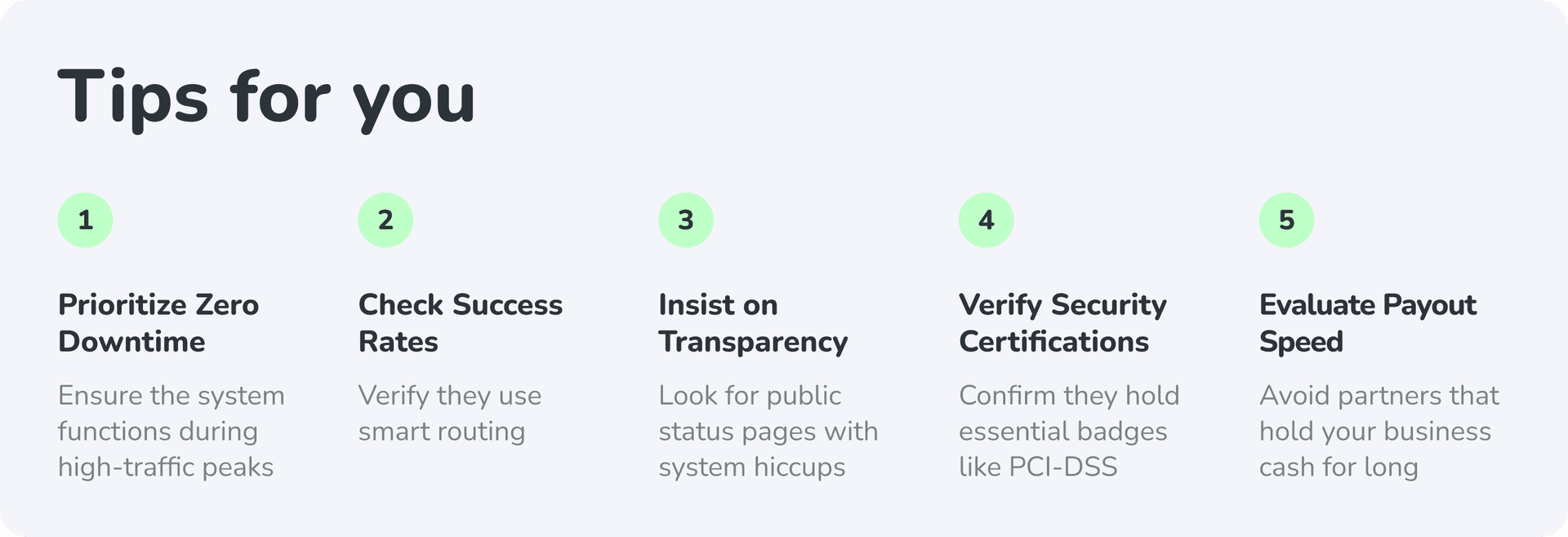
Choosing the reliable payment processing gateway is crucially improtant. How to choose right? Follow the main features' checklist.
Zero downtime
Reliability is a word people throw around a lot, but in startup payment processing, it means one thing: does it work when a thousand people try to pay at the exact same time? You can tell a processor is reliable if they have almost zero downtime. If their system crashes on Black Friday, they aren't reliable. You want a partner that stays awake so you can sleep.
Success rate
Another way to check is by looking at their success rates. Sometimes, a payment fails even if the customer has money. This happens because the "pipes" in the financial system are messy. A reliable processor knows how to route the money through different paths to make sure the sale goes through. They should also be open about their mistakes. If they have a status page that shows every tiny hiccup, that is a good sign. It means they aren't hiding anything.
Certified and secure
Don't forget about security. A reliable processor will have all the right certificates, like PCI-DSS. This is basically a badge that says, "We know how to lock the door." If they can't show you these badges, run away. Also, check how fast they give you your money. If they hold your cash for three weeks before sending it to your bank, that is a huge red flag for a payment processing startup. You need that cash to pay your own bills.
Why Startups Need Reliable Payment Processing
If you pick a bad gateway, you are essentially putting a "closed" sign on your door half the time. You worked hard to get people to your site. If they hit a clunky checkout page, they will leave. A good gateway makes the checkout feel like part of your brand. It should be smooth, fast, and familiar. When you accept crypto with ease, you open your doors to a whole new group of global customers who might not have traditional bank cards.
Having the right setup also saves you from the "fraud nightmare." Scammers love targeting new businesses because they think your guard is down. A smart gateway has built-in tools to spot a thief before they finish the transaction. This keeps your bank account safe and prevents you from having to deal with chargebacks, which are expensive and annoying.
The Role of a Payment Processor in Startup Growth
A processor isn't just a bill you pay, it is a tool for growing. If you want to sell in Japan, you need a processor that understands Japanese yen and local payment habits. If you want to start a subscription service, you need a way to handle recurring crypto payments without asking the customer for their password every single month.
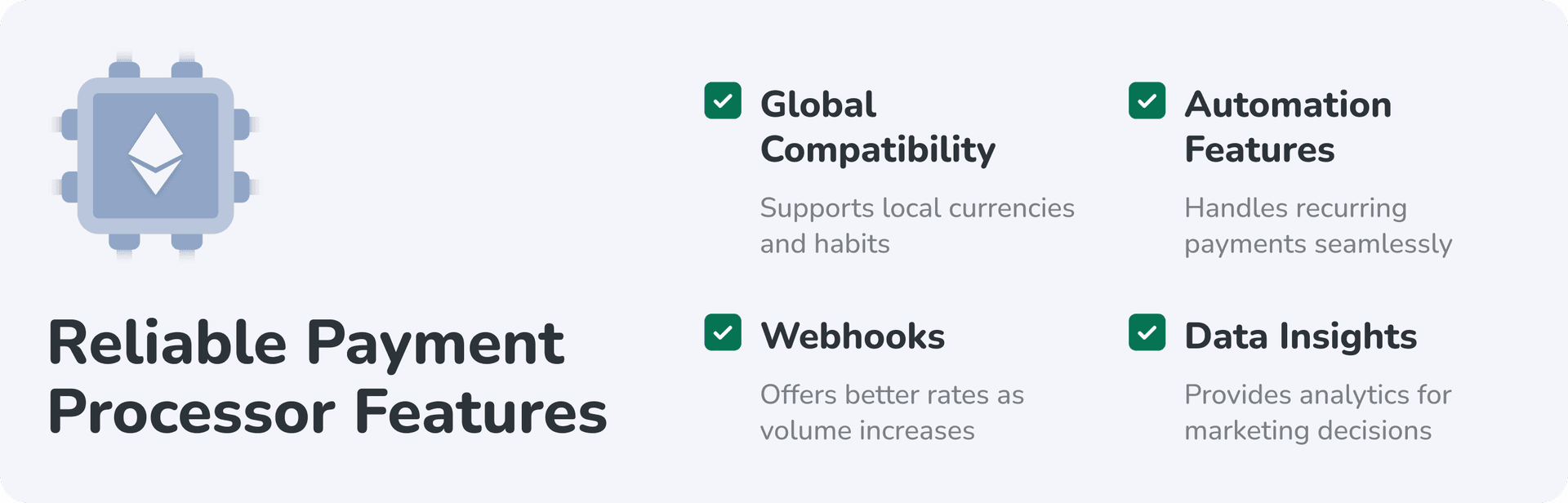
When the money side of things is automated, you can focus on making your product better. A good processor grows with you. They might start by charging you a flat fee, but as you get bigger, they should offer better rates. They also give you data. You can see when people spend the most money or which countries love your product. This info helps you decide where to spend your marketing budget. Using payment processing for startups that offers these insights is like having a free business consultant.
How Payment Gateways Complement Processing
Let's refresh how payment processing works. First, the customer clicks "pay." The gateway takes that info and sends it to the processor. The processor then sends a message to the card network (like Visa) or the blockchain. They ask the customer's bank or wallet, "Hey, does this person have $50?" If the answer is yes, the money is blocked. The message travels all the way back, and the website says "Success!"
This whole thing usually takes about two seconds. Behind the scenes, there are millions of lines of code making sure nobody is stealing the money. Later on, usually at the end of the day, all those successful sales are bundled together and sent to your business account. If you are using a crypto widget, this process can even be faster because it doesn't always have to wait for an old-school bank to wake up. It is a complex machine, but to the user, it just looks like a green checkmark.
|
Step |
Who is involved |
What happens |
|
The ask |
Gateway |
Grabs the card or wallet details |
|
The check |
Processor |
Asks the bank for permission |
|
The result |
The network |
Sends a "Yes" or "No" back |
|
The payout |
Your account |
The money finally arrives in your pocket |
Uptime, settlement speed, and integration time rarely show up clearly on a pricing page. Ask us for the real numbers instead of marketing copy.
Key Factors When Choosing a Payment Processing Solution
Don't just go with the first name you see on Google. Every payment processing startup has its own vibe and its own hidden costs. Here are five things you need to check before you commit.
The real cost
Some companies say they charge 2%, but then they add a "monthly fee" or a "gateway fee." You want a flat, clear price.
Speed of setup
If it takes three weeks of paperwork to get started, they don't understand how startups work. You need to be up and running in days.
Support
When a payment fails at 2 AM, will a human answer your email? Test their support before you give them your money.
The tech
Is their API easy to use? Your developers will hate you if you pick a provider with bad documentation.
Flexibility
Can they handle a payment link for crypto? Can they take cards? You want to be able to say yes to every customer.
Insight: Check the hidden fees
Always ask for a "complete fee schedule." Sometimes companies hide fees for "international cards" or "failed transactions" in the fine print. If they won't give you a simple list, they are probably hiding something.
How to Choose the Right Payment Processor for Your Startup
Choosing a partner is like picking a co-founder. You are going to be stuck with them for a while. Here are five criteria to keep in mind for startup payment processing.
Scalability
Will they still be a good deal when you are making $100k a month? Some providers are great for tiny companies but get too expensive later.
Compliance
Do they handle the legal stuff? You don't want to be responsible for storing credit card numbers. Let them take that risk.
Payout speed
Some will let you withdraw money every day. Others make you wait a week. For a startup, cash flow is everything.
Global reach
If you want to go global, your processor needs to be global. They should handle local taxes and currencies automatically.
Innovation
Are they adding new things? Look for features like an onramp-offramp service so you can move between "regular" money and crypto easily.
|
Does the provider... |
Yes/No |
Why it matters |
|
Have a clear API? |
Saves your developer's sanity |
|
|
Offer 24/7 support? |
Because stuff breaks at night |
|
|
Support crypto? |
Don't miss out on the future |
|
|
Have low monthly fees? |
Keeps your overhead low |
See how Inqud stacks up against the providers in this comparison — fees, crypto support, and integration time, side by side.
Top Payment Processing Startups
The market is crowded, but a few companies are really doing things differently. Here are some of the top startups in online payment processing that you should know about.
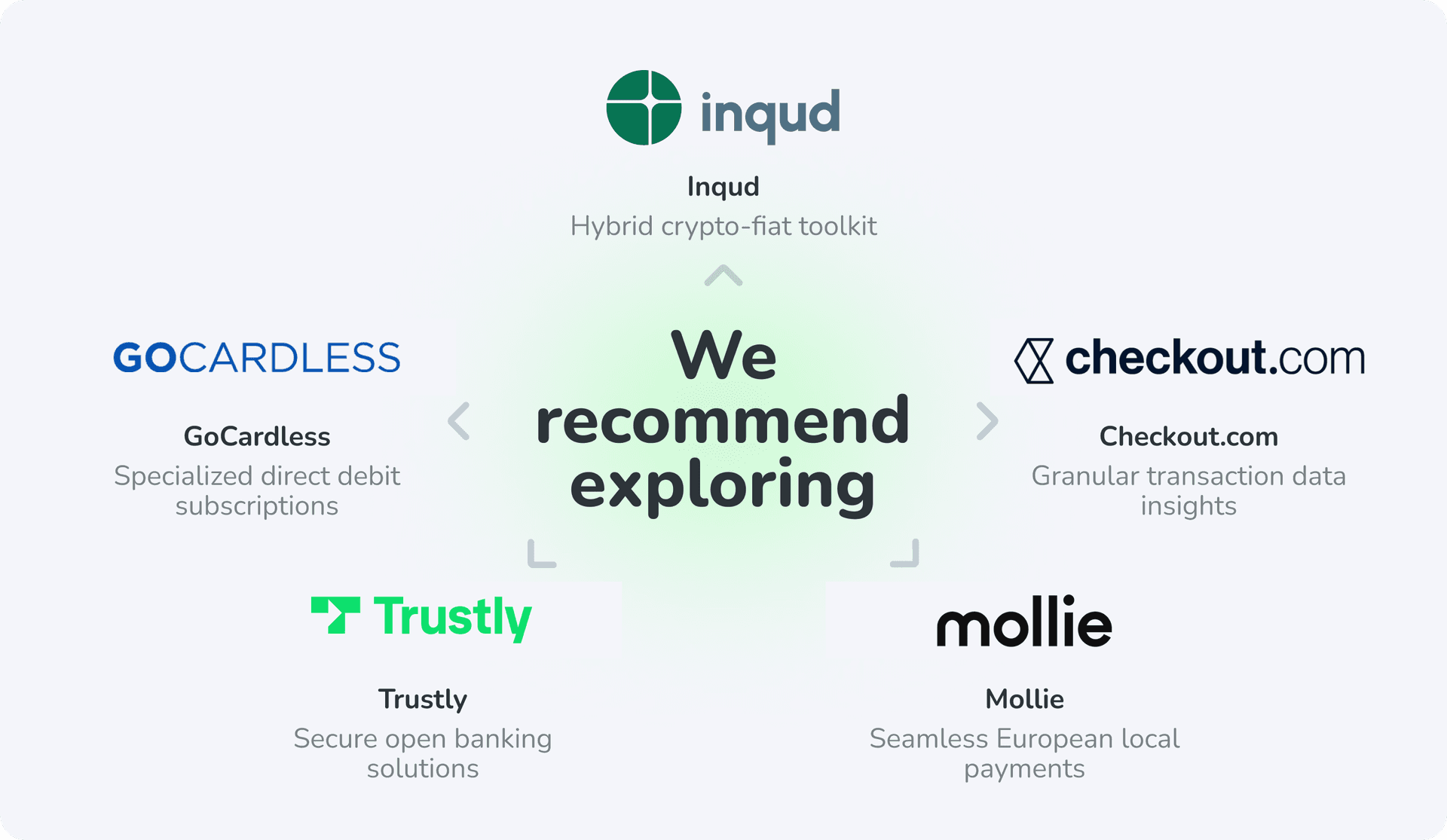
Inqud
We put ourselves first because we truly believe in what we are doing. Inqud is built for the modern age where crypto and traditional money live together. We give you not only a gateway but a whole toolkit. Whether you need an OTC desk for crypto settlements for big deals or a crypto POS terminal for a physical store, we've got it. We keep things simple because we know you have a business to run.
Mollie
Mollie is huge in Europe, especially in the Netherlands and Germany. They are known for having a really beautiful interface and being very easy to set up. They focus on "local" payments, making them a great choice for online payment processing startups that want to dominate the European market. They don't have hidden fees, which we always respect.
Checkout.com
These guys provide a massive amount of data on every transaction. If you want to know exactly why a card in France was declined, Checkout.com can tell you. They are a bit more complex, but for a tech-heavy startup, that detail is very useful.
GoCardless
If your business is all about subscriptions, GoCardless is a name you should know. They specialize in "direct debit," which means taking money directly from a customer's bank account. It is often cheaper than card payments and has fewer failures. They are a solid choice for SaaS companies.
Trustly
Trustly is a trusted vendor in "open banking." This means customers can pay directly from their bank account without even using a card. It is very popular in the Nordics and is spreading fast. It is secure and usually has lower fees than traditional credit cards.
Insight: The multi-provider tip
As you grow, don't just use one processor. Having a backup is smart. If your main provider has a bad day, you can flip a switch and keep taking payments through your second choice.
Conclusion
Finding the right payment processing startup feels like a chore, but it is one of the best investments you can make. A smooth checkout makes customers happy, and a reliable processor makes founders happy. You want a system that works in the background so you can focus on the big picture. Whether you are looking for a crypto widget to modernize your site or a full crypto payment gateway and business solutions package, the choices you make now will define your growth later.
The Inqud team will be glad to assist you with any of this. This is why they comprised this useful article. We know that the world of payment processing companies for startups is confusing, but it doesn't have to be.
Just take it one step at a time, check the fees, and make sure the support is there when you need it. Good luck with your business – we can't wait to see you grow!
Industries
Web3 payments
Products
OTC desk, Crypto widget, Сrypto payment gateway, Сard2crypto
Tags
Payment methods, Payment methods, Features
Author
Inqud Solutions for Your Business

Crypto Checkout
Start accepting cryptocurrency payments from customers worldwide

Crypto Integration
Embed a cryptocurrency payment widget on your website

Recurring Payments
Set up automatic subscription and recurring billing in crypto

Pay via Link
Create and share payment links for crypto transactions

Crypto Gateway
Enable users to buy crypto with fiat currency seamlessly